
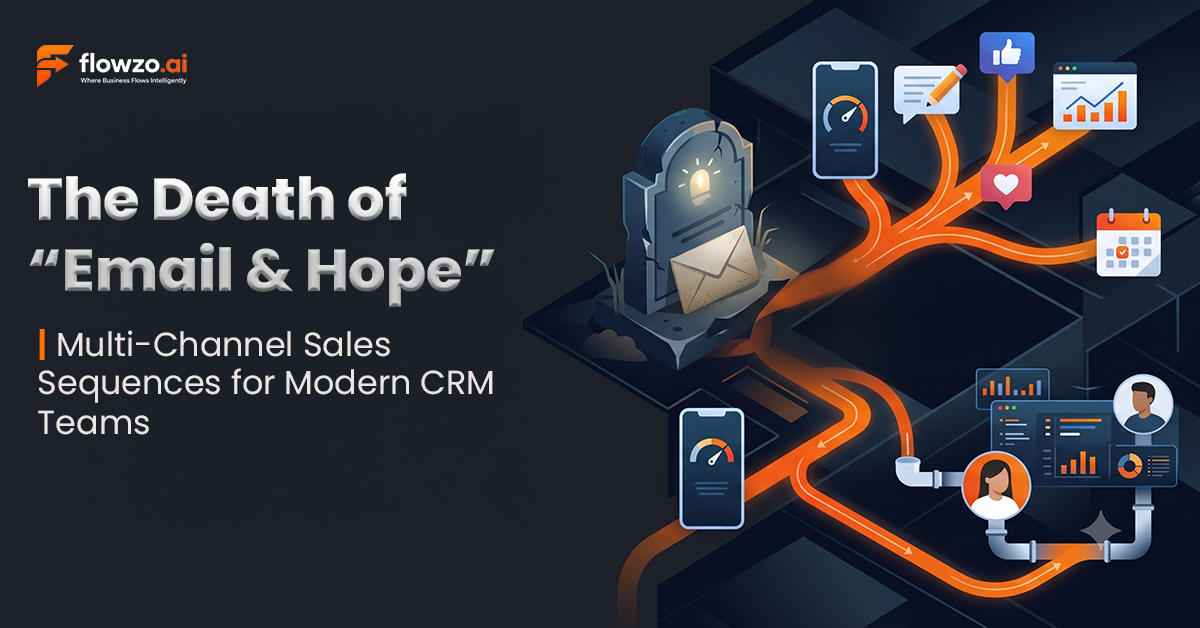
The Death of “Email & Hope” | Multi-Channel Sales Sequences for Modern CRM Teams
There was a time when sales teams believed that sending an email was enough to start a conversation. Write a compelling message, hit send, wait a few days, send a follow-up, and hope for a response.
Today, that strategy no longer works.
Modern buyers are busier than ever. They switch between email, LinkedIn, WhatsApp, phone calls, and other communication channels throughout the day. If your sales strategy relies only on email, you're likely missing valuable opportunities.
The businesses winning more deals today aren't sending more emails—they're building structured, multi-channel sales sequences powered by CRM automation.
Why the "Email & Hope" Strategy Is Failing
Email is still an essential business communication tool, but it has become one of the most crowded.
Decision-makers receive countless emails every day. Even personalized messages can get buried in overflowing inboxes or forgotten after being opened.
Another common problem is inconsistent follow-ups. A salesperson intends to reconnect with a prospect, but daily tasks take priority, reminders are missed, and promising leads slowly disappear.
Most deals aren't lost because prospects aren't interested—they're lost because businesses fail to follow up consistently.
That's where sales follow-up automation changes the game.
What Is a Multi-Channel Sales Sequence?
A multi-channel sales sequence is a planned series of customer interactions across multiple communication platforms instead of depending on email alone.
A typical sequence may include:
- Welcome email
- LinkedIn connection request
- WhatsApp follow-up
- Scheduled phone call
- Product brochure or case study via email
- Meeting invitation
Each interaction is timed strategically, helping businesses stay connected without overwhelming prospects.
Modern sales cadence software automates these touchpoints while allowing sales representatives to focus on building genuine relationships.
How CRM Automation Improves Sales Follow-Ups
Manual follow-ups often lead to missed opportunities.
With CRM automation, every activity is scheduled automatically.
Your CRM can:
- Create follow-up tasks
- Send reminders to sales representatives
- Track emails and conversations
- Record call history
- Monitor customer responses
- Update lead status automatically
Instead of managing spreadsheets or relying on memory, sales teams always know what action comes next.
This creates a more efficient B2B sales workflow that improves productivity and customer engagement.
Meet Customers Where They Prefer to Communicate
Every prospect communicates differently.
Some check email regularly.
Others respond faster through WhatsApp.
Many professionals are active on LinkedIn, while some still prefer a quick phone conversation.
A multi-channel approach gives customers the flexibility to respond through their preferred platform.
The objective isn't to contact prospects everywhere at once.
It's to reach them through the right channel at the right time.
Keep Every Customer Conversation in One Place
As businesses grow, customer information often becomes scattered.
Emails remain inside personal inboxes.
WhatsApp chats stay on mobile devices.
Phone call notes are written on paper.
LinkedIn conversations aren't visible to the rest of the sales team.
Without centralized records, important information gets lost.
A CRM solves this by storing every interaction in one place.
Anyone on the team can instantly view the customer's complete communication history, ensuring smooth handovers and better customer experiences.
A Real-World Sales Workflow
Imagine a visitor downloads a product brochure from your website.
Instead of waiting for someone to remember the next step, your CRM automatically launches a follow-up sequence.
The prospect immediately receives a thank-you email.
Two days later, the assigned salesperson receives a reminder to connect on LinkedIn.
If there's still no response, the CRM schedules a WhatsApp follow-up.
Finally, a phone call task is automatically created for the sales representative.
Every interaction is recorded, making the entire process transparent and organized.
This is exactly how an optimized B2B sales workflow should operate.
Why Businesses Are Investing in Sales Cadence Software
Today's customers expect fast responses and personalized communication.
Businesses that respond quickly build trust.
Businesses that delay follow-ups often lose deals to competitors.
That's why organizations are increasingly adopting sales cadence software and CRM automation to standardize their sales process.
The benefits include:
- Faster response times
- Consistent follow-ups
- Better team collaboration
- Improved sales visibility
- Higher lead conversion rates
- Increased customer engagement
Automation doesn't replace salespeople—it empowers them to spend more time selling instead of managing administrative tasks.
How Flowzo.ai Simplifies Multi-Channel Selling
Flowzo.ai helps modern sales teams move beyond outdated email-only strategies.
With intelligent CRM automation, businesses can:
- Automate sales follow-ups
- Schedule multi-channel sales sequences
- Manage leads from one dashboard
- Track every customer interaction
- Assign follow-up tasks automatically
- Improve team productivity
- Build a scalable B2B sales workflow
Whether your customers respond through email, LinkedIn, WhatsApp, or phone calls, Flowzo.ai ensures every conversation is organized and every opportunity receives timely attention.
Final Thoughts
The era of sending an email and hoping for a reply is over.
Modern sales success depends on consistent communication across multiple channels, supported by intelligent automation.
By combining email, LinkedIn, WhatsApp, phone calls, and CRM automation, businesses can create a structured sales process that improves follow-ups, strengthens customer relationships, and increases conversions.
If your team is still relying on the "Email & Hope" approach, it's time to upgrade your strategy with Flowzo.ai. Smarter sales follow-up automation, streamlined sales cadence software, and an optimized B2B sales workflow can help your business close more deals while delivering a better customer experience.
Frequently Asked Questions