

The Ultimate Buyer's Guide to Telecalling CRM Software in India
Every business wants its telecalling team to generate more revenue. Managers track daily call volumes, monitor agent productivity, and measure the number of leads contacted. Yet despite making hundreds of calls every day, many organizations continue to struggle with inconsistent conversions and unpredictable sales performance.
The problem is rarely the number of calls being made.
More often, it is what happens after the conversation ends.
Prospects ask for quotations, request product demonstrations, seek additional information, or simply ask to be contacted at a later date. Each of these interactions creates an opportunity—but only if the next action is executed on time. Missed callbacks, delayed follow-ups, scattered customer notes, and disconnected workflows quietly become the biggest reasons businesses lose potential customers.
This is where a modern Telecalling CRM makes the difference.
Unlike traditional CRMs that primarily store customer information, a Telecalling CRM is designed to manage the complete sales calling process. It helps teams organize leads, schedule follow-ups, synchronize customer interactions, monitor sales activities, and provide managers with complete visibility into the pipeline. Instead of depending on memory or manual tracking, every customer conversation becomes part of a structured sales workflow.
In this buyer's guide, you'll learn why sales opportunities disappear after the first call, why spreadsheets and generic CRMs struggle to support telecalling teams, the essential capabilities every modern Telecalling CRM should offer, and a practical framework for choosing the right solution for your business.
Whether you're building a small inside sales team or managing a large outbound calling operation, the principles in this guide will help you improve execution, strengthen customer engagement, and convert more conversations into customers.
Table of Contents
The Hidden Problem Behind Most Sales Calls
The Biggest Myth in Telecalling
Where Sales Opportunities Disappear After the Call
The Revenue Leak You Don't See on Your Sales Dashboard
Beyond Contact Management: What a Modern Telecalling CRM Really Does
The Five Capabilities Every High-Performing Telecalling Team Needs
SIM-Based Calling CRM
Seven Signs Your Sales Process Is Breaking Down
Why Spreadsheets and Generic CRMs Fall Short
The Follow-Up Framework That Turns Conversations into Customers
A Practical Checklist for Choosing the Right Telecalling CRM
Sales Success Is Built on Execution, Not Activity
Conclusion
Frequently Asked Questions
What You'll Learn
By the end of this guide, you'll understand:
Why most sales opportunities are lost after the first conversation—not during it.
The operational challenges that reduce telecalling productivity.
How a Telecalling CRM improves follow-up consistency and accountability.
The key capabilities every high-performing telecalling team should look for.
Why spreadsheets and generic CRMs become bottlenecks as sales teams grow.
How to evaluate and choose the right Telecalling CRM for your business.
The Hidden Problem Behind Most Sales Calls
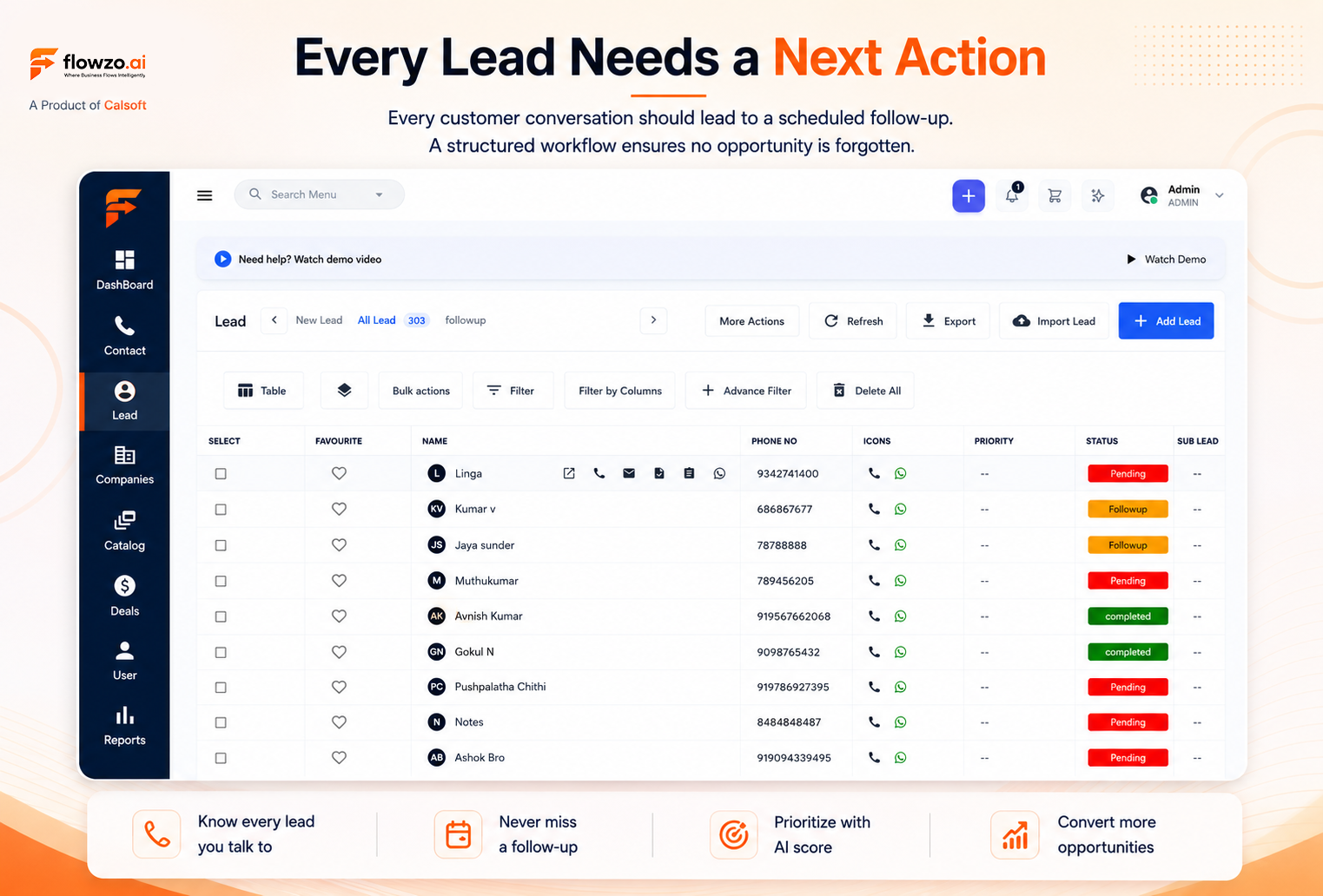
Most sales managers begin the day by reviewing activity reports.
How many calls were made?
How many prospects were contacted?
How long did each representative spend on the phone?
These metrics are useful, but they don't explain why promising opportunities fail to become paying customers.
The reality is that the first sales call is rarely the final step in the buying journey. Prospects often ask for additional information, request a quotation, schedule a product demonstration, or simply ask to be contacted after discussing the proposal internally.
Every one of these responses creates a follow-up commitment.
Unfortunately, many businesses still manage these commitments through handwritten notes, spreadsheets, personal reminders, or individual memory. As call volumes increase, these methods become increasingly difficult to maintain.
A callback scheduled for tomorrow is forgotten because newer leads demand immediate attention.
A quotation promised within the day is delayed.
An interested prospect receives no follow-up and eventually chooses a competitor that responds more consistently.
These situations rarely appear as obvious failures. Instead, they quietly accumulate over time, creating a steady stream of missed opportunities that gradually reduce sales performance.
The challenge isn't that telecalling teams lack effort. Most representatives work hard and spend significant time engaging with prospects.
The real challenge is the absence of a structured process that ensures every conversation progresses to the next stage.
High-performing organizations understand that successful telecalling isn't measured by the number of calls completed. It's measured by how consistently every meaningful conversation is followed by the right action at the right time.
When follow-ups become systematic instead of dependent on memory, businesses improve customer experience, increase accountability, and create a more predictable sales process.
The Biggest Myth in Telecalling
One of the oldest beliefs in sales is that making more calls automatically results in more revenue.
While increasing activity can generate additional opportunities, activity alone doesn't guarantee better outcomes.
Imagine two telecalling executives who each make 100 calls in a day.
The first executive records every customer interaction, schedules follow-ups immediately, updates lead status, and ensures that every commitment is completed on time.
The second executive also completes 100 calls but relies on memory, scattered notes, and manual reminders to manage future conversations.
At the end of the day, both representatives appear equally productive because their dashboards show the same call volume.
However, over the following weeks, their results will be dramatically different.
The first representative continues nurturing opportunities through timely follow-ups and structured engagement.
The second gradually loses qualified prospects because promised callbacks are missed, quotations are delayed, and customer conversations lack continuity.
The difference isn't the number of calls.
It's the quality of execution after every call.
Modern telecalling is no longer just about reaching more prospects. It's about maintaining consistent communication throughout the customer's buying journey.
Every delayed response, forgotten reminder, or missed follow-up weakens trust and gives competitors an opportunity to step in.
That's why leading sales organizations measure success not only by activity, but also by execution.
A Telecalling CRM supports this discipline by ensuring that every conversation leads to a clearly defined next action. Instead of relying on individual memory, the system creates a structured workflow where customer interactions, follow-ups, reminders, and sales activities remain connected.
Ultimately, sustainable sales growth isn't achieved by making more calls.
It's achieved by ensuring that every important conversation moves one step closer to becoming a customer.
Where Sales Opportunities Disappear After the Call
A successful sales conversation doesn't end when the customer hangs up. In most cases, that's when the real sales process begins.
Very few prospects make a purchase during the first call. They may request a quotation, ask for product information, schedule a demonstration, or simply need time to evaluate their options. Every response creates a follow-up commitment, and every commitment represents a potential sale.
The challenge is that many businesses don't have a structured system to manage these commitments.
Sales representatives often rely on handwritten notes, spreadsheets, calendars, or personal reminders. While these methods may work for a small number of leads, they quickly become difficult to manage as daily call volumes increase.
A callback promised for Friday is forgotten because new leads arrive on Thursday.
An interested prospect waits days for a quotation.
A customer requesting additional information never receives a response.
These aren't isolated mistakes—they're symptoms of an unstructured sales process.
What's even more concerning is that these opportunities rarely appear as "lost" in a CRM. They remain open, giving managers the impression that the pipeline is healthy, while the customer has already moved on to another vendor.
This creates one of the biggest hidden challenges in telecalling: revenue leakage through poor follow-up execution.
High-performing sales teams prevent this by ensuring every completed call results in a clearly defined next step. Whether it's scheduling a callback, assigning a task, sending a proposal, or updating the sales stage, every action is tracked and monitored.
The objective isn't simply to complete calls—it's to move every opportunity forward.
The Revenue Leak You Don't See on Your Sales Dashboard
Most sales dashboards are designed to measure activity.
Calls made
Connected calls
Talk time
Leads assigned
Meetings scheduled
These metrics provide valuable operational insights, but they don't answer the most important question:
How many qualified opportunities are quietly being lost because nobody followed up?
Revenue leakage rarely happens because of one major mistake. Instead, it results from dozens of small operational gaps that occur throughout the sales process.
A callback is missed.
A quotation is delayed.
A follow-up reminder is overlooked.
Customer notes aren't updated.
A returning prospect has to repeat the same conversation.
Individually, these issues may seem insignificant. Collectively, they reduce customer confidence, slow down the sales cycle, and increase the likelihood of losing business to competitors who respond faster and more consistently.
This is why modern sales leaders no longer focus solely on activity metrics. They also monitor execution metrics such as:
Overdue follow-ups
Pending callbacks
Inactive opportunities
Follow-up completion rates
Lead ageing
Sales pipeline progression
These indicators provide a far more accurate picture of sales health than call volume alone.
A Telecalling CRM makes these insights visible by tracking every customer interaction, scheduled activity, and pending commitment in one centralized platform. Managers can quickly identify stalled opportunities, coach their teams proactively, and ensure that promising leads don't disappear unnoticed.
Visibility into execution is what transforms a busy sales team into a high-performing one.
Beyond Contact Management: What a Modern Telecalling CRM Really Does
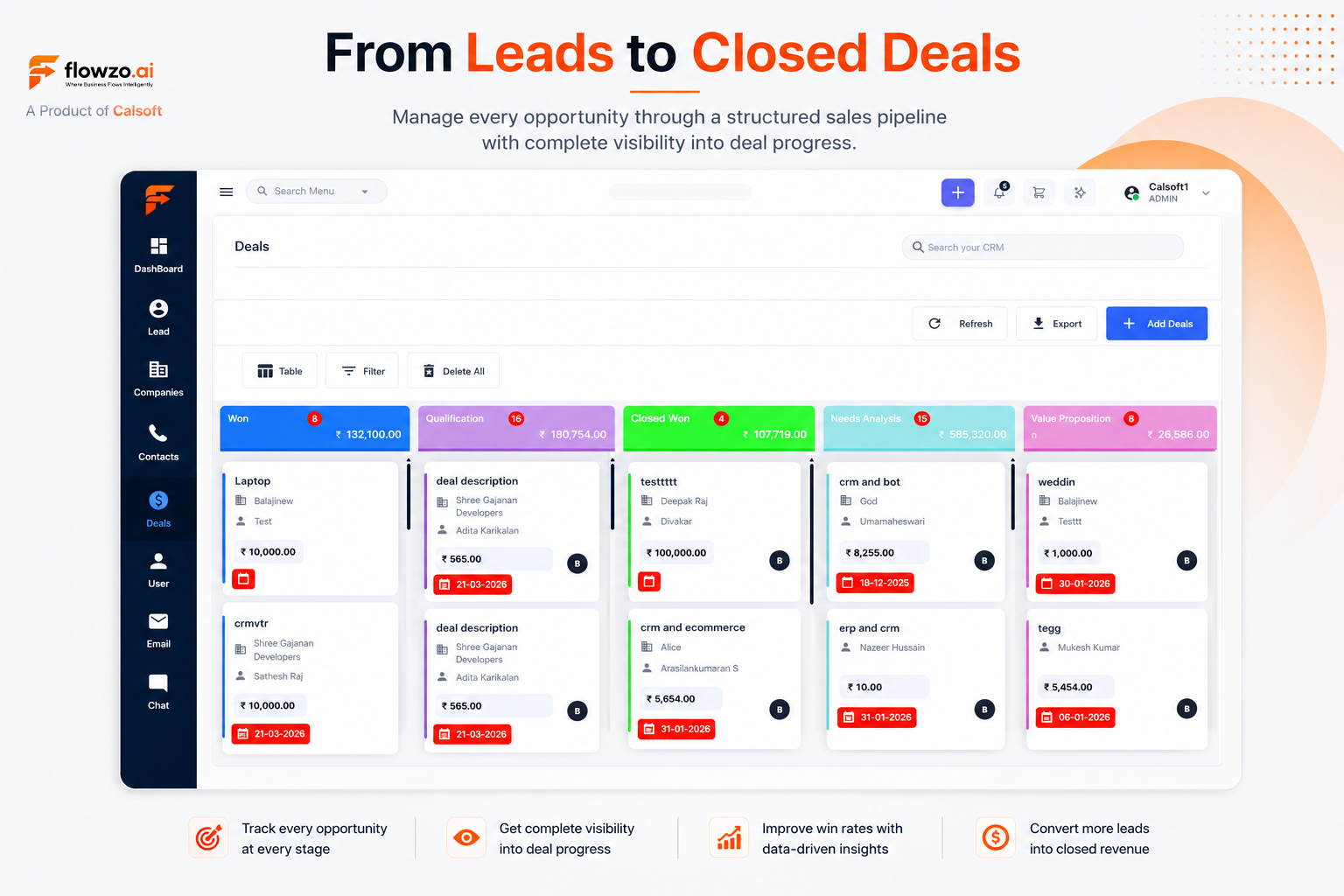
For many businesses, a CRM is simply a place to store customer information.
While contact management is important, it represents only a small part of what today's telecalling teams require.
A modern Telecalling CRM is designed to manage the complete sales execution process.
It connects every customer interaction with the next logical action.
When a representative completes a call, the CRM helps schedule follow-ups, record customer notes, update lead stages, assign tasks, synchronize call recordings, and maintain a complete history of every interaction.
Instead of relying on memory, representatives receive a structured workflow that guides their daily activities.
Managers benefit as well.
Rather than reviewing only call counts, they gain visibility into follow-up completion, team productivity, lead progression, conversion trends, and sales performance. This allows them to identify operational bottlenecks early and support their teams more effectively.
A modern Telecalling CRM also improves collaboration.
Sales representatives, managers, customer support teams, and business leaders all work from the same customer history, ensuring that every interaction is based on accurate and up-to-date information.
As telecalling operations grow, this consistency becomes increasingly important. Processes that work for a small team often become difficult to manage across larger sales organizations.
The right Telecalling CRM provides the structure needed to scale without increasing administrative effort.
The Five Capabilities Every High-Performing Telecalling Team Needs
Frequently Asked Questions
What is Email Sequencing?
Email Sequencing is a structured series of follow-up communications delivered according to predefined business rules that help sales teams maintain consistent communication with prospects throughout the buying journey.
Is Email Sequencing the same as Email Marketing?
No. Email Marketing targets large audiences with newsletters, promotions, and announcements.Email Sequencing supports one-to-one sales conversations by delivering structured follow-ups that move individual opportunities forward.
Does Email Sequencing improve sales performance?
Email Sequencing improves consistency, reduces missed follow-ups, and helps sales teams maintain momentum with prospects. While results depend on message quality, timing, and the overall sales process, a structured follow-up approach generally supports better sales execution.
How many follow-ups should a sales team send?
There is no universal number.The ideal cadence depends on your industry, buying cycle, customer preferences, and the value each interaction provides.Quality and relevance are far more important than volume.
Can small businesses benefit from Email Sequencing?
Absolutely.Small businesses often benefit significantly because structured follow-up reduces manual effort while helping lean sales teams manage growing pipelines more consistently.
Does Email Sequencing replace personal communication?
No. It automates routine scheduling and reminders while allowing sales professionals to focus on meaningful conversations and relationship building.
What makes an effective Email Sequence?
An effective sequence combines:- Clear objectives
- Relevant messaging
- Appropriate timing
- Personalization
- Consistency
- Valuable content
- A clear next step
Clear objectives
Relevant messaging
Appropriate timing
Personalization
Consistency
Valuable content
A clear next step